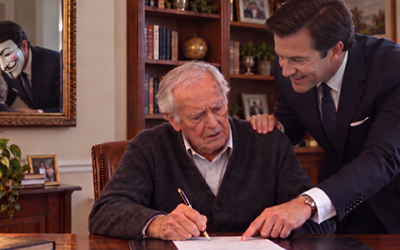
“By failing to prepare, you are preparing to fail.” (Benjamin Franklin)
A dementia diagnosis affects far more than memory. As the condition progresses, it can impair a person’s ability to manage finances, make legal decisions, sign contracts, or deal with property and investments.
For many families, the legal implications only emerge when practical problems arise. A bank account needs accessing, a property needs selling, or financial decisions must be made for someone who can no longer act independently.
At that point, many assume a Power of Attorney will help. South African law says otherwise.
The Power of Attorney myth
A Power of Attorney allows one person to act on another’s behalf. It is commonly used when someone is travelling, unavailable, or needs assistance with specific transactions.
What many people do not realise is that a Power of Attorney is only valid while the person who granted it still has legal capacity. In simple terms, they must be able to understand the nature and consequences of their decisions.
Once a person loses that capacity through dementia, Alzheimer’s disease, a stroke, or another condition affecting cognitive function, the Power of Attorney falls away. South Africa does not currently recognise enduring powers of attorney that remain valid after a person becomes mentally incapacitated.
This can create practical difficulties. For example, if a property is sold after the owner has lost legal capacity, a Power of Attorney that was previously valid may no longer authorise the transaction. That can create legal uncertainty at a time when families are already under pressure.
Let’s look at three other options.
1. Curatorship: The traditional route
Where a person can no longer manage their own affairs, the High Court may appoint a curator bonis to take control of their financial affairs.
A curator manages assets, pays expenses, and protects the person’s financial interests. In some circumstances, a separate curator may also be appointed to deal with personal matters such as medical and care decisions.
Curatorship provides important protection, but it can be a lengthy and costly process. The application requires medical evidence, court involvement, and ongoing oversight by the Master of the High Court. For larger or more complex estates, however, it may be the most appropriate option.
2. Administration: A lesser-known alternative
In some cases, a simpler option may be available.
The Mental Health Care Act allows the Master of the High Court to appoint an administrator to manage the property and financial affairs of a person who is unable to manage their own affairs because of a mental illness or severe intellectual disability.
Unlike curatorship, this process does not require a High Court application, making it generally quicker and less expensive.
However, it is only available in specific circumstances and is generally intended for smaller estates. An administrator’s powers are limited to financial and property matters and remain subject to the supervision of the Master.
Professional advice is essential to determine whether this option is available in a particular case.
3. Special trusts: Planning before capacity is lost
Where dementia is diagnosed at an early stage and the person still has legal capacity, a special trust may be worth considering.
Unlike curatorship and administration, which are generally implemented after capacity has been lost, a special trust allows arrangements to be put in place while the individual can still participate in decisions about their future affairs.
Special trusts may also offer tax advantages in certain circumstances and can provide a structured way of managing assets for the benefit of a person who later becomes unable to manage their own financial affairs. Professional advice is essential to determine whether a special trust is appropriate and how it should be structured.
Act sooner rather than later
Dementia presents families with both emotional and practical challenges. The earlier legal planning begins, the more options are available.
A common thread running through curatorship, administration, and trust planning is timing. Once legal capacity has been lost, choices become more limited, and the available solutions often become more complex and costly.
Dementia cannot always be anticipated, but its legal consequences can. Understanding the available options before a crisis develops can help families protect both the dignity and financial wellbeing of a loved one during an already difficult time.
Disclaimer: The information provided herein should not be used or relied on as professional advice. No liability can be accepted for any errors or omissions nor for any loss or damage arising from reliance upon any information herein. Always contact us for specific and detailed advice.
© LawDotNews