“Good fences make good neighbours.” (Robert Frost)
The neighbours, in the affluent suburb of Bakoven, had been locked in an acrimonious dispute for almost two decades when CCTV cameras became the latest point of contention.
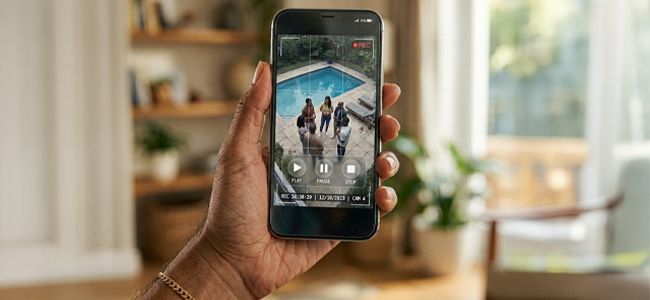
The cameras installed at one property had a clear line of sight into parts of the neighbouring property, including a courtyard, part of a swimming pool and entertainment area and, according to the neighbour, the interior of a bedroom. The cameras also had 24-hour surveillance and recording capability.
Security has limits
The camera owners argued that the system had been installed for legitimate security reasons, including concerns about crime and protecting their property.
The Court recognised the importance of security. The question was whether monitoring the neighbouring property was a reasonable and justifiable way of achieving that objective.
On the evidence, however, the Court was not persuaded that security was the primary concern. It concluded that the security concerns were secondary to a grievance about structures on the neighbouring property.
The evidence also showed that significant portions of the cameras’ viewing angles were directed at the neighbouring property, including areas the Court regarded as intimate and private.
Privacy does not stop at the boundary wall
Section 14 of the Constitution protects the right to privacy. As interpreted by the Constitutional Court, that protection includes a sphere of intimacy and autonomy that should be protected from intrusion.
The Court found that areas such as a private swimming pool, entertainment area and courtyard are places where people can reasonably expect to conduct their personal and family lives without being subjected to systematic surveillance.
The fact that part of a neighbouring property may be visible from elsewhere does not mean it can be placed under permanent camera monitoring. Privacy is not limited to areas of complete physical seclusion.
Could the intrusion have been avoided?
The camera installer did not deny that alternative locations were available that could protect the owners’ property without intruding on their neighbour’s privacy.
The Court also pointed to less restrictive security measures, including electric fencing, burglar bars and a security system with motion detector beams. The camera owners therefore failed to show that the limitation of their neighbour’s privacy was justified.
The Court also upheld the finding that the persistent surveillance amounted to an actionable nuisance. Continuous monitoring was materially different from a neighbour occasionally looking over a boundary wall: the neighbour, his family and guests were subjected to permanent and invasive scrutiny.
The cameras had to move
The appeal was dismissed, leaving in place an order requiring the cameras to be removed and repositioned so that they had no line of sight into the neighbouring property.
Importantly, the order went further. The camera owners were also prohibited from installing future cameras or recording devices with a direct line of sight into the neighbour’s private property.
The Court also ordered the camera owners to pay legal costs on the higher attorney and client scale. The Court said this was justified by the way the litigation and appeal had been conducted, including the inclusion of extensive irrelevant material and an unsuccessful attempt to introduce further evidence. It also described the conduct of the camera owners’ legal representatives as objectionable and vexatious. The judgment does not prevent homeowners from using CCTV for security. It does make clear that security measures must be proportionate and should not unnecessarily place a neighbour’s private spaces under surveillance.
Installing CCTV, or concerned that a neighbour’s cameras are monitoring your property? Speak to us.
Disclaimer: The information provided herein should not be used or relied on as professional advice. No liability can be accepted for any errors or omissions nor for any loss or damage arising from reliance upon any information herein. Always contact us for specific and detailed advice.
© LawDotNews